Cardiff Central: eight platforms, city-centre access and an Art Deco past
Cardiff Central (CF10 1EP) has eight platforms and city-centre access. Learn how to check entrances and platforms, plan parking and taxi pickup, and navigate accessibility—plus the station’s Art Deco past.
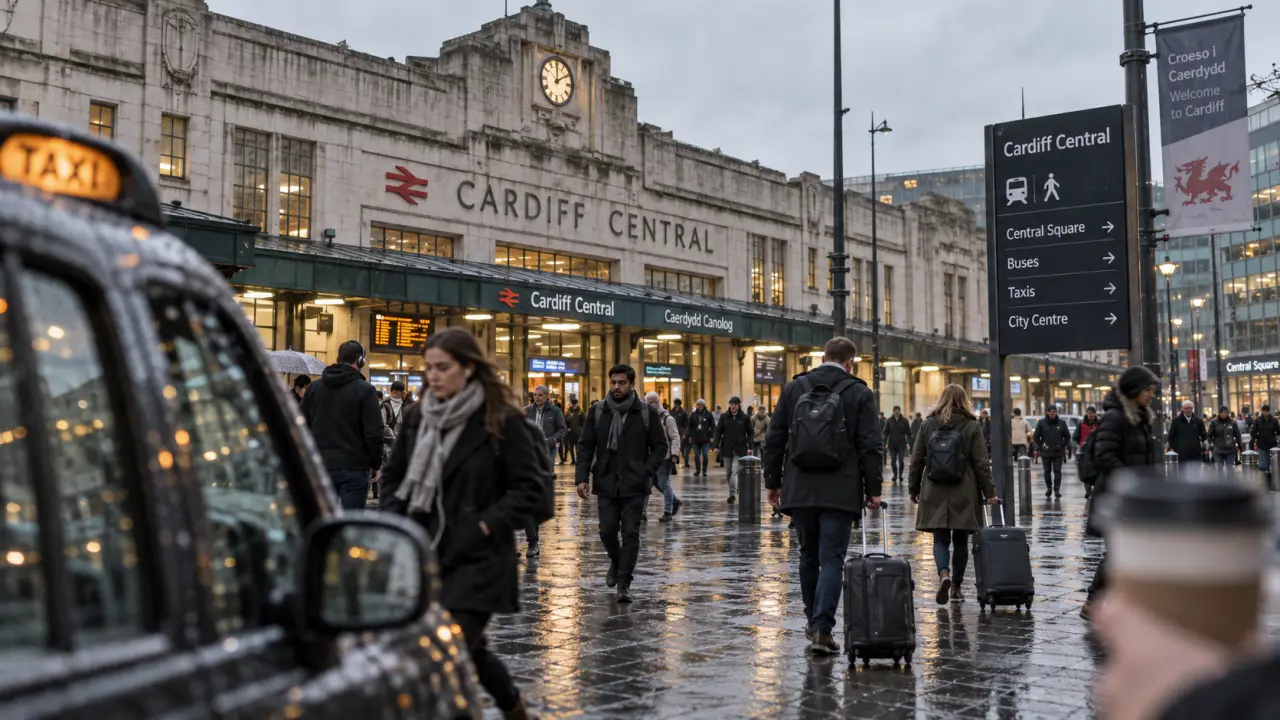
Cardiff Central railway station is at Central Square, Cardiff, CF10 1EP. Known in Welsh as Caerdydd Canolog, it serves city-centre arrivals, regional journeys and longer-distance rail connections. For passengers, the practical distinction is between finding the station’s address and checking the entrance, platform and onward route needed for a particular journey.
Cardiff Central station: location and identity
National Rail identifies the station at Central Square, Cardiff, CF10 1EP. Its station code is CDF, a useful identifier when checking a journey or confirming that a booking is for the right Cardiff station.
Cardiff Central is managed by Transport for Wales and owned by Network Rail. It is a principal station on the South Wales Main Line, combining regional connections with longer-distance services. That interchange role matters when planning a trip: arriving in Cardiff and changing trains at Cardiff can require different allowances for finding the next departure.
Cardiff Queen Street is a separate station. Check the full station name on each stage of an itinerary rather than treating “Cardiff” as a single destination. If meeting someone, agree the station and meeting point explicitly; a postcode alone does not establish which entrance either person will use.
Train connections and the eight-platform layout
Cardiff Central connects journeys across South Wales, West Wales and North Wales, alongside routes to other major British cities. The appropriate service depends on the destination and travel date. A broad route description is not a substitute for checking whether an individual journey is direct or involves a change.
The station has eight platforms, numbered 0–4 and 6–8. The missing number in that sequence can be confusing on a first visit. Follow the number shown for your departure rather than assuming the platforms run consecutively from one to eight.
For a connection, keep these checks separate:
- Confirm the destination and departure time of the onward train.
- Check its platform against the station’s departure information.
- Allow time to reach that platform, particularly with luggage or assistance needs.
- Recheck the information before boarding rather than relying on a previous journey.
Do not build a connection around an assumed platform allocation. Timetable information, platform information and disruption notices answer different questions; all three can affect the same journey.
Parking, pick-up and taxis: check the approach first
Transport for Wales’ station guidance addresses parking changes, alternative parking at Cardiff Central Quay multi-storey car park and altered pedestrian routes during construction. Treat the approach to the station as part of the journey, not simply the final turn on a driving route.
Plan your journey from Cardiff Central station · Find official information on parking, facilities, access and travel services at Cardiff Central station.
The parking guidance includes a 20-minute free pick-up and drop-off period at the multi-storey car park. Check the current conditions before using it. A short-stay allowance should not be treated as permission to wait indefinitely if an arriving train is delayed.
Taxi access is described from Saunders Road, with different arrangements on event days. Before arranging a collection, confirm the applicable instructions with Transport for Wales and agree a precise meeting point with the driver. Avoid relying on an old description of a taxi rank or access road.
Think of a collection as a meeting window rather than a single arrival time. A train reaching its platform does not mean its passenger has reached the roadside. Leave room for getting off, finding the exit and walking to the agreed location. Having the passenger confirm they are ready before the driver enters a time-limited collection area can reduce unnecessary waiting.
Accessibility and construction-related walking routes
Passenger assistance and the route from the street to the train should be planned together. Transport for Wales’ access guidance directs passengers with reduced mobility towards the multi-storey car park for accessible parking, pick-up and drop-off arrangements. Confirm the current instructions before setting off.
When requesting assistance, explain the whole journey: arrival method, luggage, mobility requirements and any onward connection. Ask which entrance to use and where to meet staff. An accessible drop-off arrangement does not, by itself, settle every question about reaching a particular platform.
Construction can also change the distance between a familiar landmark and the entrance. Check the latest station access information rather than assuming a previously used pedestrian route remains available. Allow additional time where a diversion would be difficult, especially when travelling with children, heavy bags or limited mobility.
National Rail’s station information and Transport for Wales’ station guidance serve different practical purposes: use the former to confirm the station details and the latter to check access instructions and assistance arrangements. Check your train’s status separately before travelling.
From the 1850 railway to the Art Deco frontage
Cardiff Central opened in 1850. It became Cardiff General in 1924 and took the name Cardiff Central in 1973. These earlier names explain why historical references do not always match the wording passengers see today.
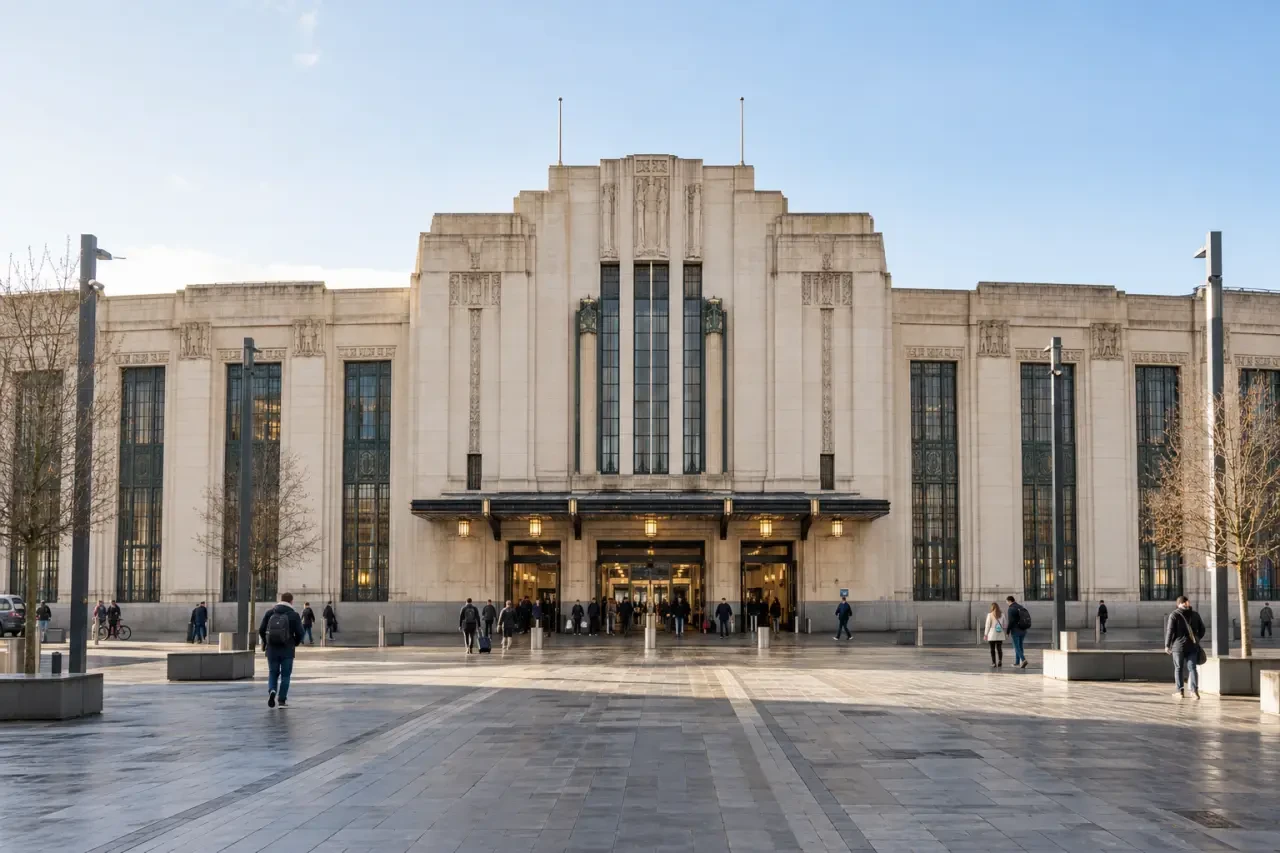
The station was rebuilt between 1931 and 1934. Its Art Deco frontage and Grade II listed status make architectural heritage part of the station’s identity, alongside its working role as a railway interchange. The frontage belongs to that reconstruction rather than the original opening period.
Later changes have added capacity and access. The southern entrance opened in September 2015, followed by platform 8 in January 2017. These developments help explain why the station cannot be understood solely through its historic front elevation.
For a visit today, keep that history separate from operational planning. The building’s origins are settled; the best entrance, available walking route and departure platform still need checking for the journey being made.